Blog 2

The Abandon Area of the University of Mary Washington has become an eyesore.

March 12, 2025

In the city of Fredericksburg, there is a university known as the University of Mary Washington. This cherished institution has been a cornerstone of education and culture in the area for decades.

With a rich history dating back to its founding, the university draws students from various backgrounds who are captivated by its legacy and commitment to academic excellence. The campus boasts a stunning landscape filled with meticulously maintained gardens, towering trees, and an array of eye-catching statues that pay homage to its storied past.

This panoramic setting lies a stark contrast just a few steps to the left of the main campus: an abandoned area that the university appears to have neglected. While Mary Washington takes great pride in upholding a clean and inviting environment across its grounds, this basketball court has sadly become an eyesore, littered with trash and debris. What should be a vibrant space for student recreation has instead turned into a dumping ground, overshadowing the beauty of the surrounding campus.

The university has made significant investments in maintaining its historical buildings, focusing on preserving iconic structures such as those along Campus Walk and enhancing modern facilities, like the recently renovated computer science area on the bottom floor of the Farmer Building.

These efforts reflect the institution’s dedication to honoring its heritage while adapting to the needs of contemporary students. Yet, in its pursuit of modernization and historic preservation, it seems to overlook the importance of caring for all aspects of its campus, including the neglected spaces that are also part of its history.

Allowing trash to accumulate in these overlooked areas detracts from the campus’s overall appeal and poses a more significant environmental threat. Litter can harm local wildlife and contribute to pollution, exacerbating issues related to climate change.

The basketball court, once a potential site for community engagement and student interaction, now reminds us of the gap between the university’s aspirations and its current realities. Cleaning up the abandoned basketball court and creating a sense of community could transform it into a focal point of student life rather than a forgotten relic.

Ultimately, it is the responsibility of both the institution and its students to work together to ensure that the University of Mary Washington’s legacy encompasses both history and environmental stewardship, creating a lasting impact for generations to come.

Blog 1

The Start of Spring

March 11, 2025

Every day, on my walk to and from class, I pass by this magnificent tree. It’s impressive how such a simple sight can carry so much significance. Until now, I never realized how deeply climate change can impact our daily lives and environments. As I observe the flowers blossoming and the branches swaying in the wind, I can’t help but think about how we are likely to experience both warmer weather and colder weather due to these changes.
This is not just a distant concern; it is right here in front of me and serves as a reminder of how fragile our ecosystem is. Nature can be excellent when it flourishes, but we must be vigilant in caring for it. If we don’t step up, we risk losing the vibrant colors of flowers that burst into bloom every spring—their beauty is fleeting and delicate, much like our relationship with the environment.
These buds are not just a joy for the eyes; they attract pollinators, improve air quality, and support the ecosystem’s overall health. Every small action we take—whether it’s reducing waste, conserving water, or simply being more mindful of our consumption—can contribute to a healthier planet. It’s a collective responsibility that we all share.
As I walk by that tree, I often wonder how future generations will experience nature. Will they be able to enjoy the same breathtaking sights and sounds that I do? Or will they inherit a world where these beautiful moments are diminished, overshadowed by the challenges of a changing climate?
Caring for our environment is essential; it is an act of love for the world around us. If we can ensure that these lovely trees remain as vibrant and stunning as they were when they first bloomed, we not only preserve their beauty but also safeguard life itself.

skyline drive

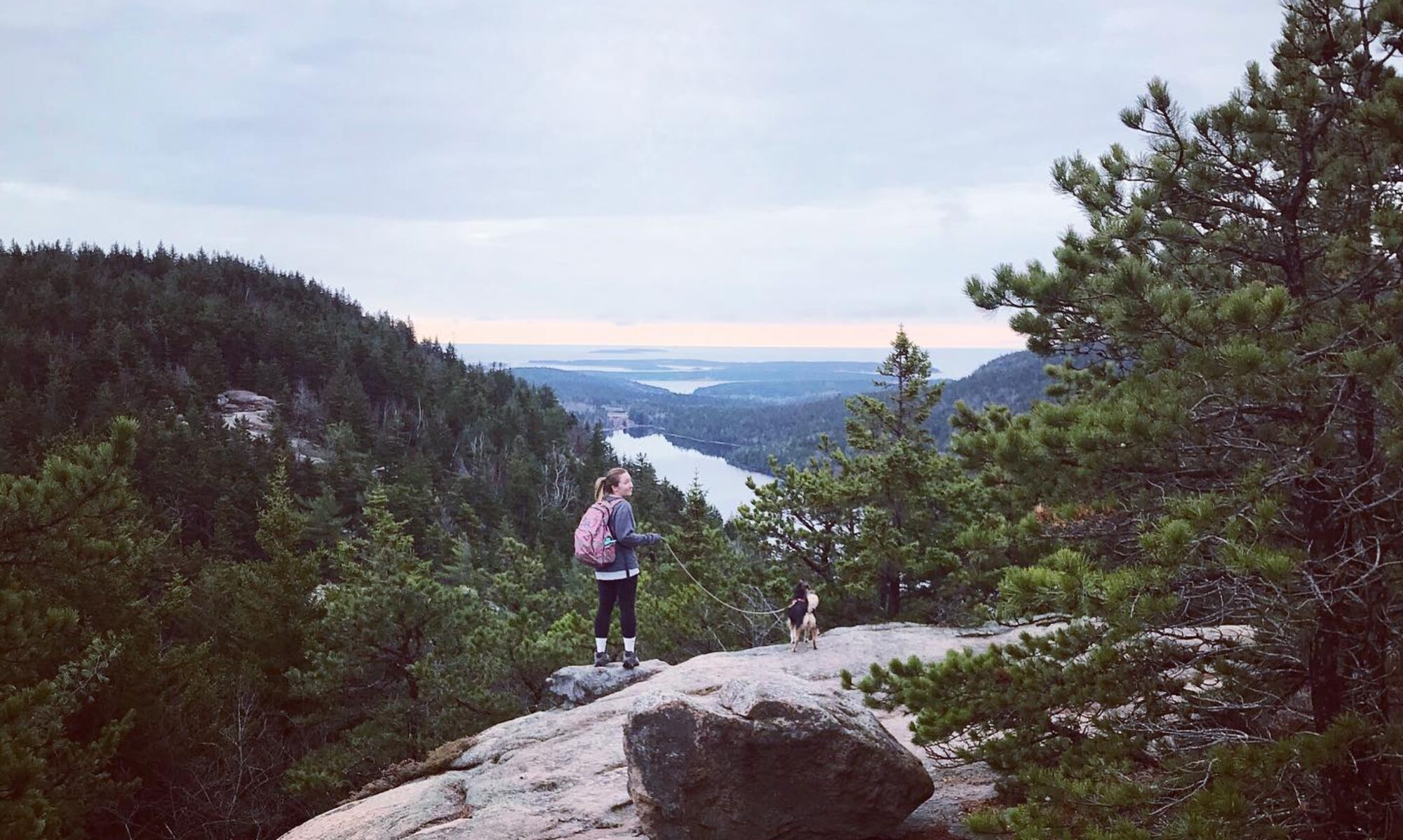
My friend and I look out to the mountains.

The first of February—harsh and cold, air that pierces your skin and makes it numb if you’re outside too long. The snow from last week was not fresh anymore, melting into the concrete and making the ground wet. These were not the perfect conditions for travel, and yet, my friends and I wanted to utilize our free weekend to see the mountains. Shenandoah National Park has become a favorite travel site of mine. The hikes are strenuous, especially in the summertime. I don’t like to sweat, so visiting when it’s cold is optimal, especially when you want to avoid the crowd. However, my friends and I did not dress well for the occasion, so we opted to stick to Skyline Drive. From the National Park Service: “The Skyline Drive runs 105 miles north and south along the crest of the Blue Ridge Mountains in Shenandoah National Park and is the only public road through the Park.” We only traveled about an hour and a half from beginning to end, ending up in Luray, Virginia.

My friend takes photos of me and my dog.

Pezzullo’s reflection on the interconnectedness of all things, from dog and human to toxic chemical and womb, resonates with my daily experiences. My dog, a nine-year-old chocolate lab, is inseparable from me—emotionally, she supports me as much as I support her. As we take the journey on Skyline Drive, her presence reminds me that we are part of a larger web of interactions. We are not separate from every other thing. I’m mindful to clean up after her not just out of courtesy, but because her waste, like everything in nature, is part of a delicate balance. Disposing of waste reflects our shared responsibility to keep nature from being disrupted by pollution, acknowledging that any attempt to ‘conquer’ or separate ourselves from nature can have consequences.

In places more populated by people, we may interact with gardens, oxygen, rain, squirrels, lead, and more. In other words, wherever we are, biochemical processes interact between dog and human, toxic chemical and womb, and excrement and waterways. Any attempt to separate ourselves out and ‘conquer’ nature, therefore, becomes our Achilles’ heel (Pezzullo).

Pezzullo, Phaedra C. “Environment.” Oxford Research Encyclopedia of Communication, by Phaedra C. Pezzullo, Oxford University Press, 2017. DOI.org (Crossref), https://doi.org/10.1093/acrefore/9780190228613.013.575.
A deer mural in Luray.
Interpretive signage photographed by Cosmos Mariner, May 17, 2019.

As we drove along, we’d hop out at each overlook, taking in the gorgeous views of the Virginian mountains. Something that caught my eye was the interpretive signage along almost every overlook, enticing the viewer in to read about the history or uniqueness of each sight. The photo above is not mine, but it is similar to the one that I read on our trip. The visual and textual rhetoric reminded me of our chapter on Visual and Market Advocacy. Particularly, where the image says “the scenic highway should also provide opportunities for recreation and the simple pleasure of enjoying the view. To accomplish this, civil engineers devised clever ways to build a scenic-yet-stable road in steep and rocky terrian. The careful attention to the driving experience means that you hardly notice the road as you travel along.”

My friend and the mountains.

The signage emphasizes that despite humans having a large part in building these roads, you cannot notice this, as the scenery takes over your main perceptions. In Pezzullo and Cox’s Environmental Communication and the Public Sphere, they state, “When Watkins portrayed Yosemite Valley as wilderness, devoid of humans, he also helped construct a national myth of pristine nature that was harmful” (pg 133). Acknowledging the forceful removal of peoples in the America that were here long before us is also important when regarding the beauty of natural spaces. Many tribes, such as the Manahoac peoples, were located in the Shenandoah and Fredericksburg areas before European colonialism.

Works Cited

Cox, J. Robert, and Phaedra Carmen Pezzullo. Environmental Communication and the Public Sphere. Fifth edition., SAGE Publications, 2021.

Pezzullo, Phaedra C. “Environment.” Oxford Research Encyclopedia of Communication, by Phaedra C. Pezzullo, Oxford University Press, 2017. DOI.org (Crossref), https://doi.org/10.1093/acrefore/9780190228613.013.575.